

-
Predict something
-
Classify data
- Generate text or images
-
Write articles
-
Create designs
- Help with coding
- Answer complex questions
- AI Models → AI Agents
What Are AI Models?
What AI Models Can Do
-
Answer questions
-
Generate text
- Create images
- Predict results
-
Classify data
Example
- Email text
-
Send email
-
Schedule campaign
- Analyze audience
Main Limitation
-
Reactive (they wait for input)
-
Single-step (one answer only)
- No real action system
What Are AI Agents?
-
Think
-
Plan
- Use tools
- Take actions
-
Complete full goals
Simple Definition
-
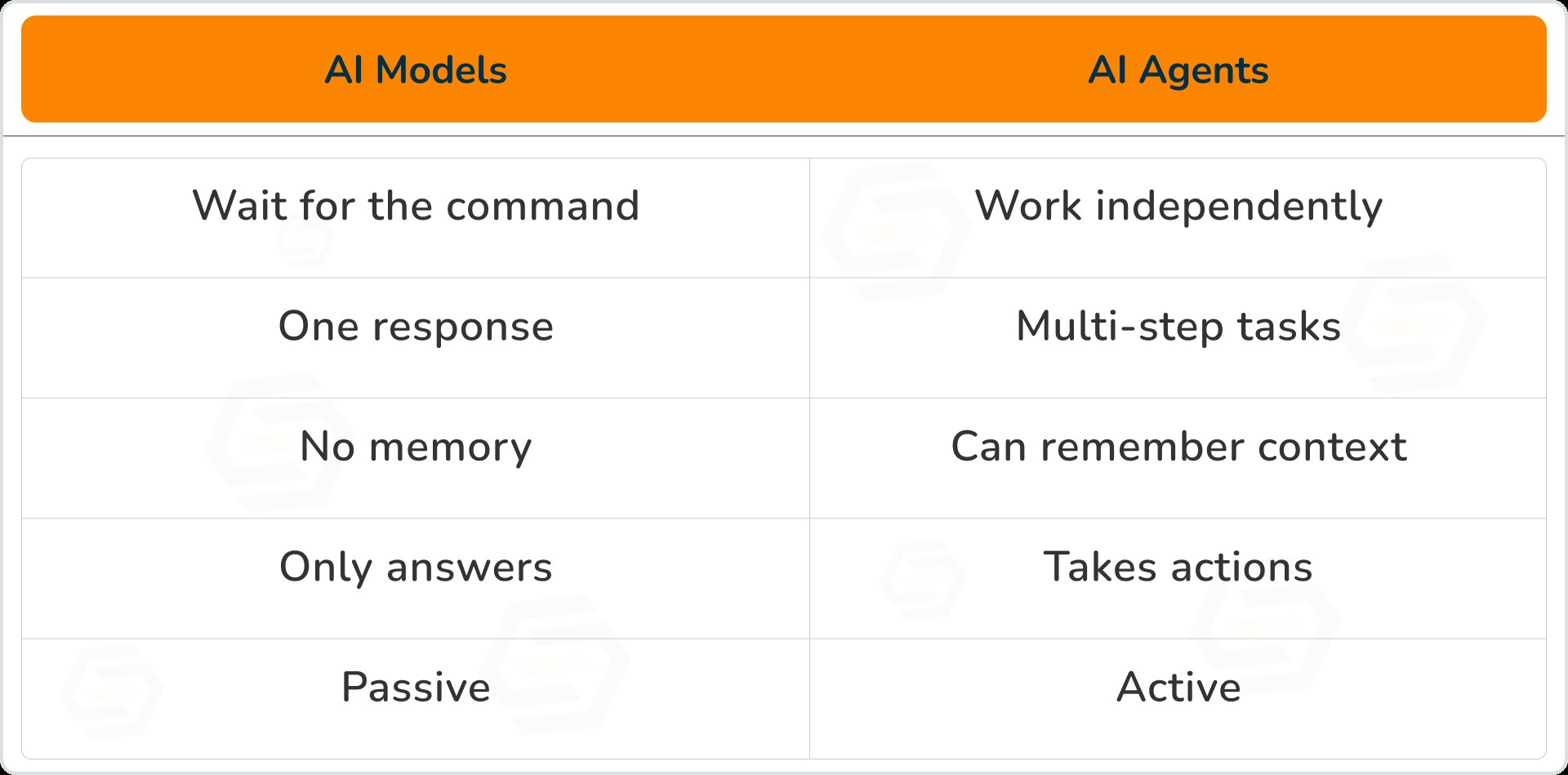
AI model = answers
-
AI agent = performs tasks
Example
-
Write email content
-
Create ad copies
- Schedule posts
- Select audience
-
Track performance
-
Improve results
Key Difference
Why 2026 Is a Big Turning Point
-
Manage emails
-
Book meetings
- Write and deploy code
- Handle customer support
-
Run marketing workflows
-
Analyze business data
Why This Is Possible Now
-
Better AI reasoning
-
Tool integration (APIs, apps)
- Memory systems
- Automation frameworks
-
Cloud AI platforms
Real-World Example
Scenario 1: AI Model
-
Text plan
-
Ideas list
Scenario 2: AI Agent
Step 1: Understand Goal
-
Product name
-
Target audience
Step 2: Plan Work
-
Email campaign
-
Social media posts
- Ads strategy
Step 3: Take Action
-
Write emails
-
Create ad copies
- Schedule posts
Step 4: Monitor
-
Check performance
-
Improve content
How AI Agents Actually Work
1. Brain (AI Model)
2. Memory
-
User preferences
-
Past actions
- Context
3. Tools
-
Email systems
-
APIs
- Databases
- CRMs
-
Web apps
4. Action Engine
-
Sending emails
-
Updating records
- Running workflows
Why Businesses Are Using AI Agents
1. Less Manual Work
2. Faster Decisions
3. Lower Cost
4. 24/7 Operation
Example in Business
- 5 people handling customer support
- 1 AI agent + human supervision
Practical Use Cases of AI Agents
1. Customer Support
-
Reply to queries
-
Solve common problems
- Escalate complex issues
2. Marketing
-
Create campaigns
-
Post content
- Analyze engagement
3. Software Development
-
Write code
-
Fix bugs
- Run tests
- Deploy applications
4. HR Systems
-
Screen resumes
-
Schedule interviews
- Send updates
5. Business Operations
-
Generate reports
-
Track sales
- Manage workflows
Challenges of AI Agents
1. Loss of Control
2. Wrong Decisions
-
Send wrong emails
-
Use the wrong data
- Take incorrect actions
3. Security Risks
4. Data Privacy Issues
5. Over-Automation
How to Use AI Agents Safely
1. Always Set Limits
-
What AI can do
-
What AI cannot do
2. Human Approval System
3. Logging System
-
What AI did
-
When it did it
- Why did it do it
4. Regular Testing
-
Edge cases
-
Wrong inputs
- Security attacks
5. Use Role-Based Access
Role of Humans in the AI Agent Era
-
Do execution
-
Handle repetition
- Process data
-
Make final decisions
-
Define goals
- Control ethics
- Handle exceptions
Future of AI Systems
-
Self-working systems
-
Digital employees
- Fully automated workflows
- Human control remains necessary
Technology Partner Role
-
AI model systems
-
AI agent workflows
- Automation pipelines
- Secure AI platforms
-
Enterprise AI solutions
-
Safe
-
Scalable
- Practical
- Business-ready
Conclusion
-
AI models = give answers
-
AI agents = complete tasks
What This Means
Final Thought
-
Think
-
Plan
- Act
- Learn
Practical Takeaway
-
AI workflows
-
AI agents
- Automated systems
Dipak Pakhale
A skilled .Net Full Stack Developer with 8+ years of experience. Proficient in Asp.Net, MVC, .Net Core, Blazor, C#, SQL, Angular, Reactjs, and NodeJs. Dedicated to simplifying complex projects with expertise and innovation.
Reply