In today’s digital-first world, your website is often the first interaction people have with your business. Before they call you, email you, or visit your office, they usually visit your website. Because of this, your website plays a very important role in building trust, explaining your services, and converting visitors into customers.
One of the most common questions businesses ask before building a new website or redesigning an existing one is:
Should we go with a one-page website or a multi-page website?
This question does not have one fixed answer. The right choice depends on many factors, such as:
- How users should interact with your website
At Sparkle Web, we help businesses choose the right website structure based on growth plans, performance needs, user experience, and conversions. We don’t just design websites; we design solutions that support your business today and in the future.
Let’s understand both options clearly.
What is a One-Page Website?
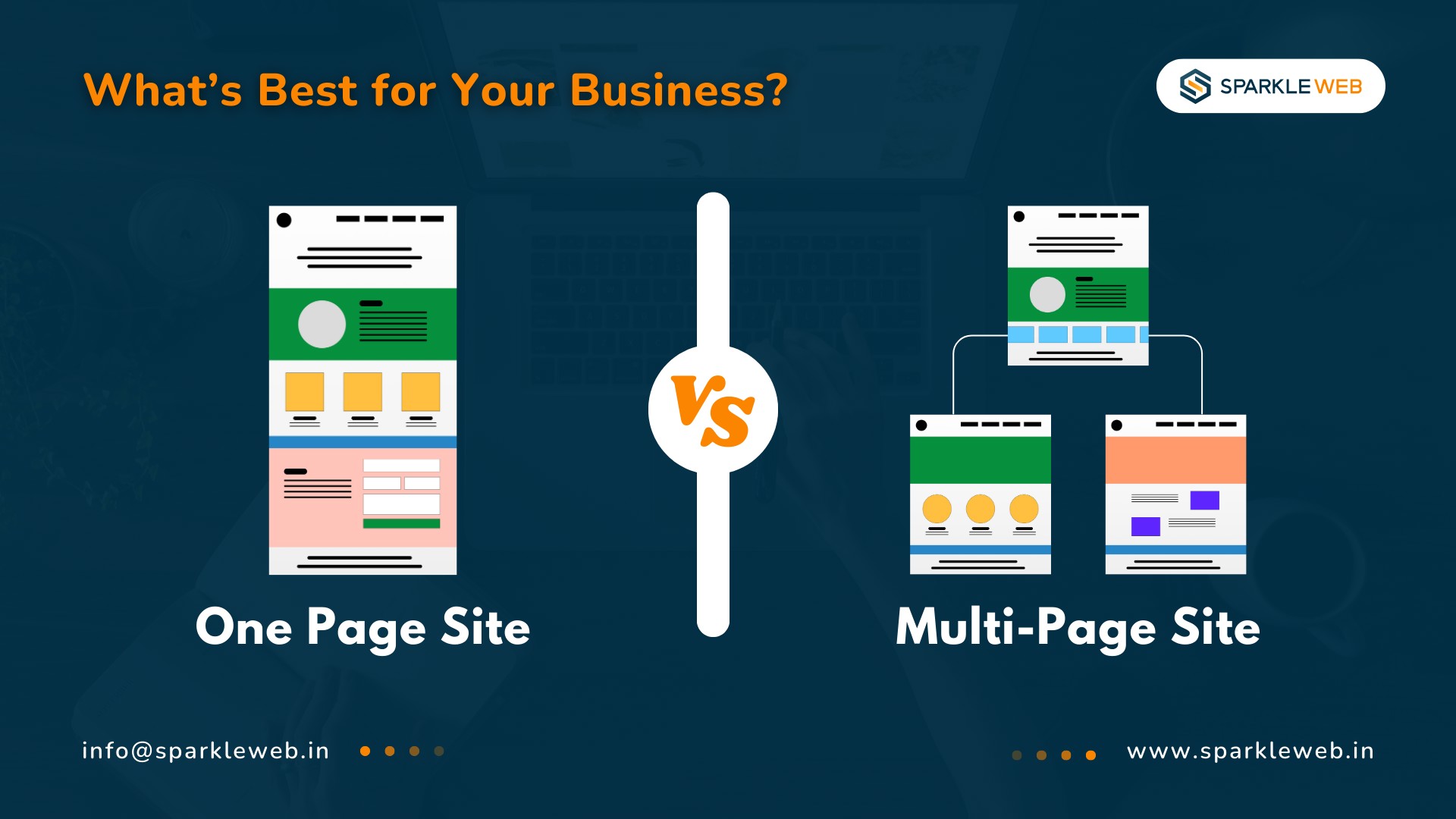
A one-page website displays all its content on a single page. Instead of clicking to different pages, users scroll down to view different sections such as About, Services, Features, Testimonials, and Contact.
The navigation menu usually scrolls the user to different sections of the same page rather than opening a new page.
Common Use Cases for One-Page Websites
One-page websites are commonly used for:
- Portfolio websites: Personal or creative portfolios showcasing work.
Advantages of One-Page Websites
1. Simple & Focused User Experience
One-page websites guide users through a clear and simple journey. Visitors start at the top and scroll down step by step until they reach a call-to-action.
There are fewer distractions because users don’t need to jump between pages. This makes the experience smooth and easy to understand.
Example:
A startup launches a new app and wants users to sign up. A one-page site can introduce the app, show benefits, display reviews, and end with a signup form - all in one flow.
2. Faster Development & Lower Cost
Because there is only one page layout:
-
Design takes less time
-
Development is faster
- Maintenance is easier
This makes one-page websites more affordable, especially for startups or small businesses with limited budgets.
3. Mobile-Friendly by Nature
Most users browse websites on mobile phones. Scrolling is very natural on mobile devices, and one-page websites work very well in this format.
Users don’t need to wait for new pages to load, which improves engagement and reduces bounce rates.
4. Higher Conversion Rates for Single Goals
One-page websites are perfect when you have one clear goal, such as:
-
Contact us
-
Sign up
- Download
Because the page is focused, users are more likely to complete the action.
Limitations of One-Page Websites
1. Limited SEO Potential
Search engines like Google prefer websites with multiple pages targeting different keywords. A one-page website usually has:
This makes it harder to compete in search results for many keywords.
2. Not Suitable for Content-Heavy Businesses
If your business offers:
-
Many services
-
Blogs and articles
- Detailed product pages
Then a one-page site can feel crowded and confusing.
3. Harder to Scale Over Time
As your business grows, you may need:
-
New services
-
New landing pages
- Blogs or resources
A one-page site becomes difficult to manage and expand.
4. Less Flexibility for Navigation
Users who want quick access to specific information may find too much scrolling frustrating, especially on desktop devices.
We recommend one-page websites primarily for focused campaigns, MVPs, and early-stage businesses seeking rapid results.
What is a Multi-Page Website?
A multi-page website consists of several connected pages. Each page focuses on a specific topic or service, such as Home, About, Services, Blog, Contact, and more.
Users navigate between pages using menus and links.
Common Use Cases for Multi-Page Websites
Multi-page websites are ideal for:
-
Corporate websites
-
SaaS platforms
- E-commerce stores
Advantages of Multi-Page Websites
1. Strong SEO Performance
Each page can target different keywords and topics. This allows businesses to:
Example:
A digital agency can have separate pages for web design, SEO, mobile apps, and content marketing—each optimized for search engines.
2. Scalable & Flexible Structure
As your business grows, you can:
-
Add new pages
-
Launch new services
- Expand content
Without affecting the existing structure.
3. Better Content Organization
Multi-page websites make it easier to organize information clearly. Visitors can quickly find what they need without scrolling through long sections.
4. Enhanced User Navigation
Clear menus and page structure help users:
This improves trust and user experience.
Limitations of Multi-Page Websites
1. Higher Development Time and Cost
More pages mean:
-
More design work
-
More development
- More testing
This increases time and cost.
2. Requires Ongoing Content Management
Multi-page websites need:
-
Regular updates
-
Content maintenance
- SEO improvements
3. Needs Clear Navigation Planning
Without proper planning, a multi-page website can become confusing. Good structure is essential.
We specialize in scalable, SEO-friendly multi-page websites designed for long-term success.
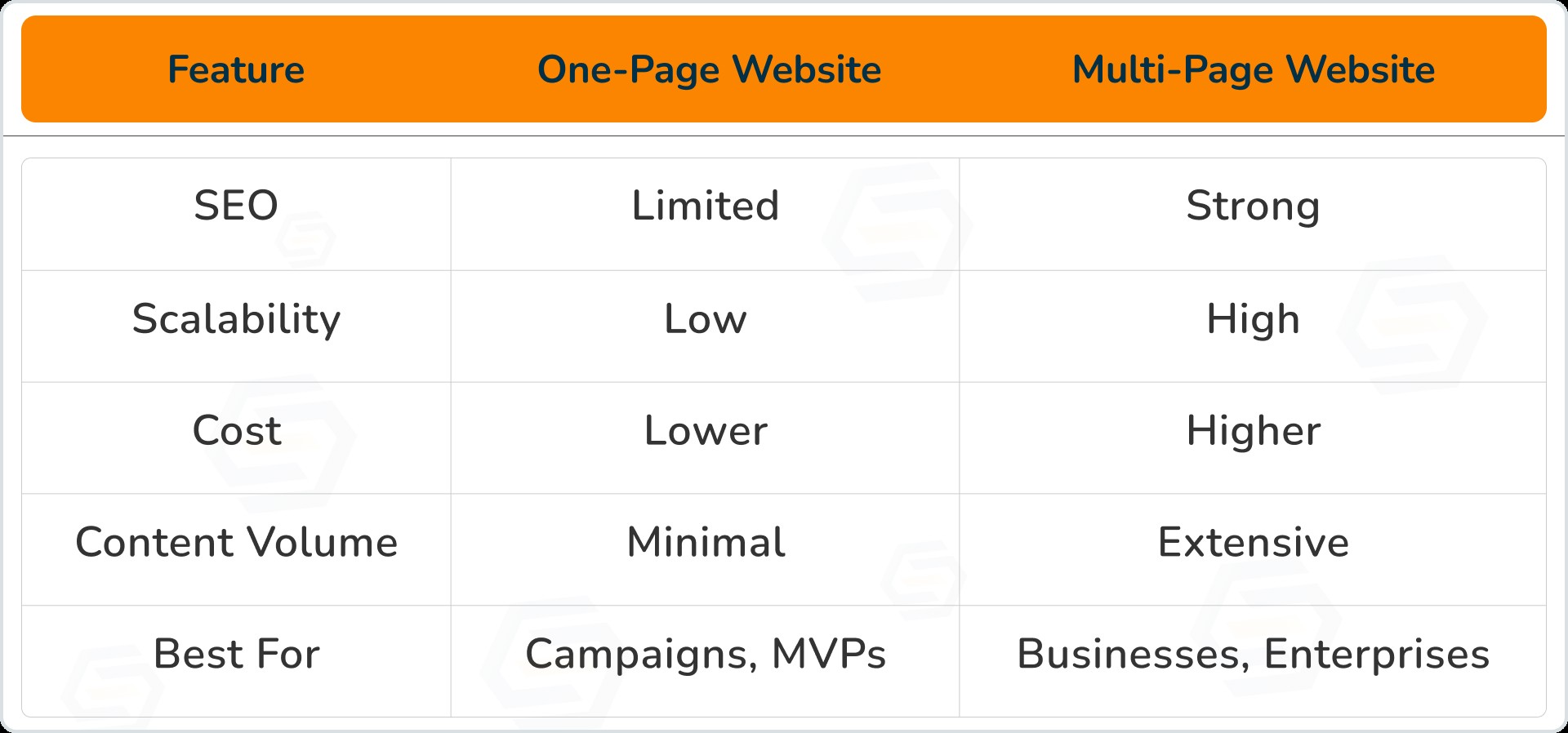
One-Page vs Multi-Page: Quick Comparison
Which One is Best for Your Business?
Choose a One-Page Website if:
- Time and budget are limited
Choose a Multi-Page Website if:
- You plan to scale your business
We carefully study your:
-
Business goals
-
Target audience
- Growth plans
Before recommending the right website structure.
How We Help You Decide & Build Right
- Mobile and performance optimization
We don’t just build websites - we build digital experiences that grow with your business.
Final Thoughts
There is no single right answer when choosing between a one-page and a multi-page website. The best option depends on what your business needs today and where it wants to go tomorrow.
-
Expert advice
-
Clear strategy
- Future-ready development
No matter which option you choose. Let us help you build a website that truly works for your business.
Contact us!


Dipak Pakhale
A skilled .Net Full Stack Developer with 8+ years of experience. Proficient in Asp.Net, MVC, .Net Core, Blazor, C#, SQL, Angular, Reactjs, and NodeJs. Dedicated to simplifying complex projects with expertise and innovation.
Reply