

Angular 21: Direction and Thinking Behind the Framework
-
High performance, so apps run fast even with many users
-
Signal-based reactivity for a clear and predictable state
- Standalone and modular structure for clean code
- Enterprise-level stability for long-term projects
-
Better developer experience so teams can work faster and happier
1. Signals: The New Base for State in Angular
What Are Signals?
Why Signals Are Important
-
Data changes are clear and predictable
-
Only the needed parts of the UI update
- Apps become faster
- Debugging becomes easier
-
Less code is required
Example Using Signals
import { signal, computed } from '@angular/core';

export class ProductComponent {
  quantity = signal(1);
  price = signal(1200);

  total = computed(() => this.quantity() * this.price());

  increment() {
    this.quantity.update(q => q + 1);
  }
}
In this example:
-
quantityandpriceare simple signals -
totalupdates automatically when either value changes - No manual change detection is needed
Sparkle Web View
-
We use signals for UI and component-level state
-
We still use RxJS for APIs, streams, and async work
2. State Management in Angular 21
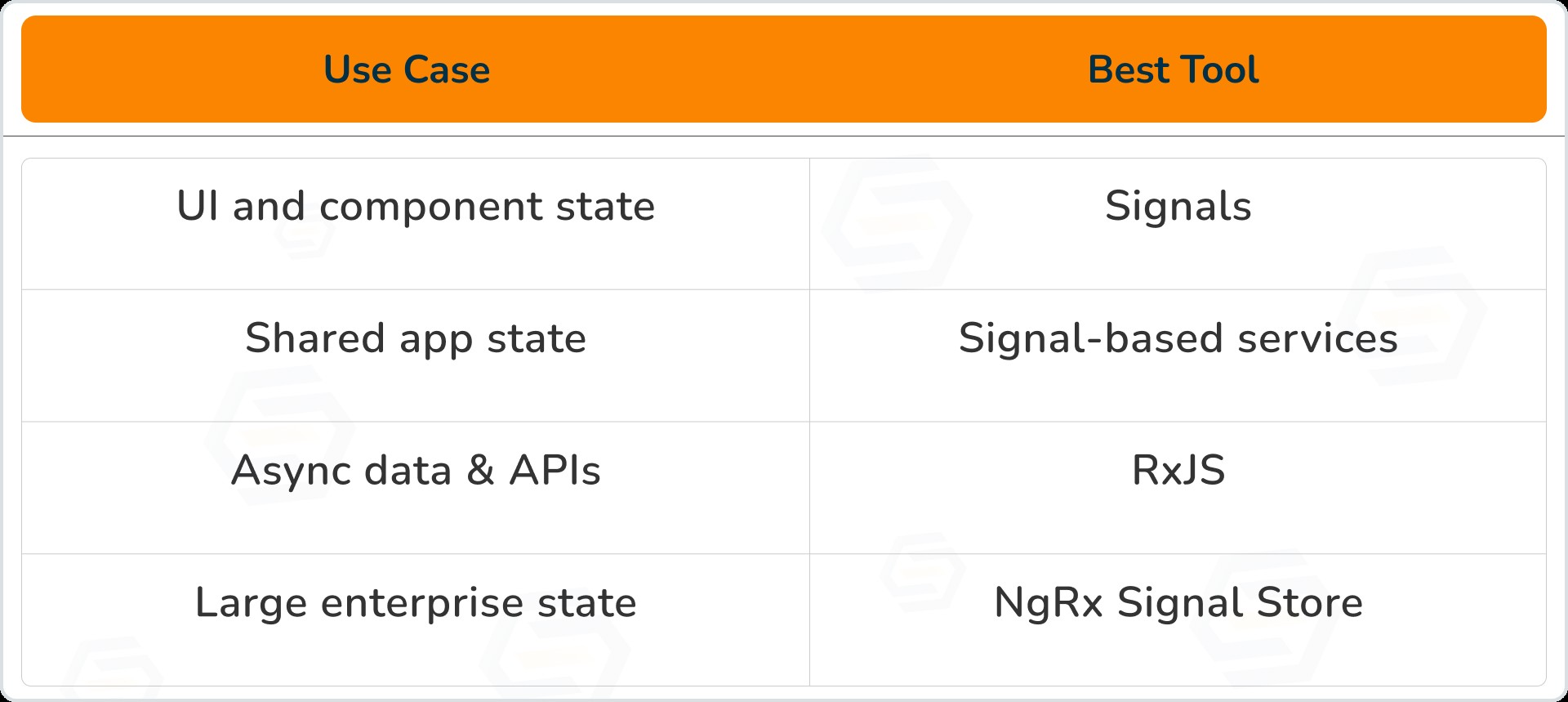
A Simpler Way to Manage State
Recommended State Tools (2026)
NgRx Signal Store: The New Direction
-
The structure of NgRx
-
The simplicity of signals
export const CartStore = signalStore(
  withState({ items: 0 }),
  withMethods(store => ({
    addItem() {
      store.items.update(v => v + 1);
    }
  }))
);
This approach:
-
Reduces boilerplate
-
Makes apps faster
- Keeps enterprise-level structure
3. Standalone Components Are the Default
Why Standalone Components Are Better
-
Less setup code
-
Easier to understand
- Faster builds
- Better lazy loading
-
Faster onboarding for new developers
Example
@Component({
  standalone: true,
  selector: 'app-dashboard',
  imports: [CommonModule],
  templateUrl: './dashboard.html'
})
export class DashboardComponent {}Enterprise Impact
-
All new Angular projects use a standalone-first architecture
-
This helps apps scale without becoming messy
4. Better Template Control Flow
Example
@if (orders.length > 0) {
  @for (order of orders; track order.id) {
    <p>{{ order.name }}</p>
  }
} @else {
  <p>No orders available</p>
}
Benefits
-
Templates are easier to read
-
Fewer errors at runtime
- Better checks during build
- Cleaner HTML
5. Zoneless Angular: Faster Change Detection
Why Removing Zone.js Helps
-
Smaller app size
-
Better performance
- Clear control over updates
- More predictable behavior
Example Setup
bootstrapApplication(AppComponent, {
  providers: [
    provideExperimentalZonelessChangeDetection()
  ]
});
When using Zoneless Angular
-
Fintech dashboards
-
Real-time SaaS apps
- High-traffic platforms
6. Build Speed and Performance Improvements
-
Vite-based builds
-
Faster hot reload
- Better tree-shaking
- Smaller bundles
Business Benefits
-
Faster page loads
-
Lower server costs
- Faster deployments
- Better SEO
7. Angular 21 Plugins and Tools
Key Tools Used in 2026
-
Better signal debugging
-
Performance insights
- Change detection tracking
-
Cleaner code
-
Safer changes
- Consistent standards
-
Large project support
-
Microfrontend-ready
- Faster CI/CD
8. Best Libraries for Angular 21
UI and Design
-
Angular Material (signal-friendly)
-
PrimeNG
- Tailwind CSS
Data and APIs
-
TanStack Query (Angular support)
-
Apollo Angular (GraphQL)
- Axios
Testing
-
Playwright
-
Jest
- Cypress
9. Server-Side Rendering and SEO
Why SSR Matters
-
Better Google ranking
-
Faster first load
- Better mobile experience
Our SEO Approach
-
Angular SSR
-
Performance audits
- Real user metrics
10. Enterprise and Cloud-Ready Angular
-
Microfrontend systems
-
Cloud deployments
- CI/CD pipelines
- Long-term maintenance
Industries That Benefit Most
-
Fintech
-
Healthcare
- SaaS
- Large enterprise portals
How We Support with Angular 21
Our Angular Services
-
Angular upgrades and modernization
-
Signal-based architecture planning
- Performance and SEO optimization
- Enterprise Angular development
-
Long-term support
Final Thoughts
-
Speed
-
Simplicity
- Scalability
- Clean architecture
-
Reduce future problems
-
Improve performance
- Scale with confidence
Dipak Pakhale
A skilled .Net Full Stack Developer with 8+ years of experience. Proficient in Asp.Net, MVC, .Net Core, Blazor, C#, SQL, Angular, Reactjs, and NodeJs. Dedicated to simplifying complex projects with expertise and innovation.
Reply